with an MA training in Theatre and Performance from Queen Mary University and drama school at Collective Acting Studio, my work moves between traditional and experimental practices, combining theatre, visual art, photography, and installation to explore themes of identity, embodiment, memory, and emotional inheritance.
my most recent works include layered (2026), an exploration of generational trauma, repetition and material trace through a practice-based moving-image research and unfold (2026), a practice-led installation investigating the same themes of generational trauma through the body using photography and projection.
layered (2026)
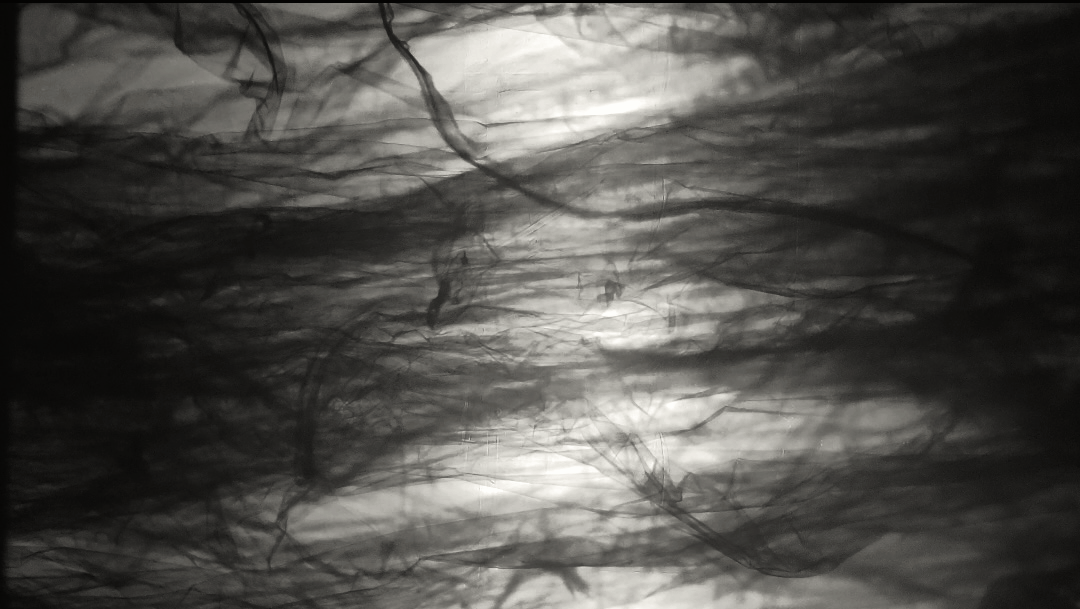
layered is a fifteen-minute experimental moving-image work exploring generational trauma through repetition, accumulation, materiality and duration. the project began with an interest in doubling: the possibility of representing an external self alongside an internal or inherited self.
Conceptual Research - Investigating generational trauma, postmemory and the possibility that inherited experiences remain present within the body without conscious recollection. The initial inquiry focused on doubling as a representation of internal and external selves.
Cinematic & Theoretical Research - Drawing on Maya Deren's experimental cinema, Ingmar Bergman's Persona, Freud's uncanny and theories of inherited memory. Repetition, fragmented temporality and unstable identity became central to the developing visual language.
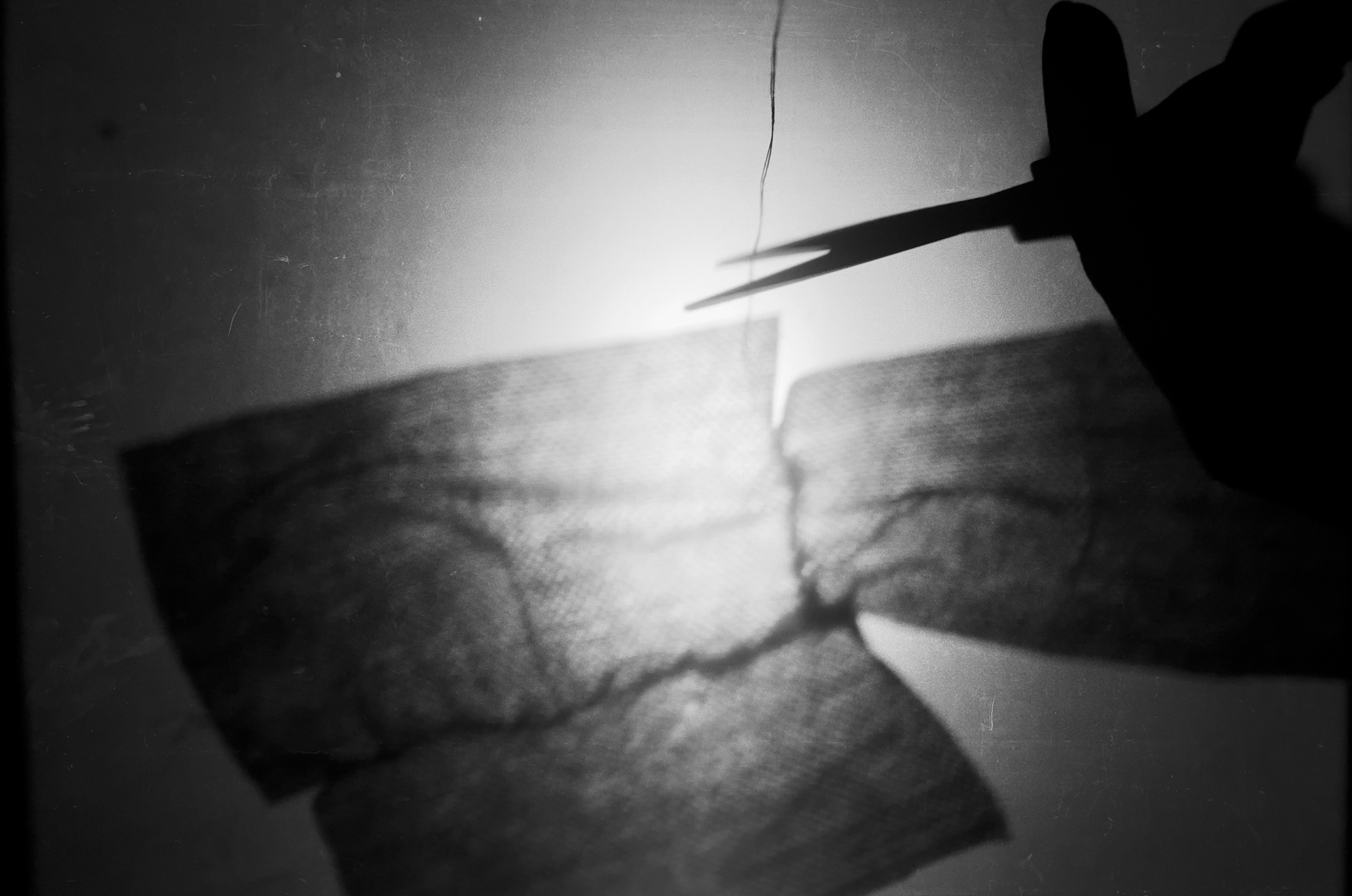
Practical Experimentation - Testing shadow projection, silhouettes, facial close-ups, gauze masks, thread and ritualised actions. These experiments explored concealment, bodily transformation and the relationship between what is visible and what remains hidden.
Conceptual Transformation - Moving away from the literal duplication of figures towards doubling as a material and temporal relationship. The idea of two selves gradually evolved into overlapping traces, surfaces and histories occupying the same present.
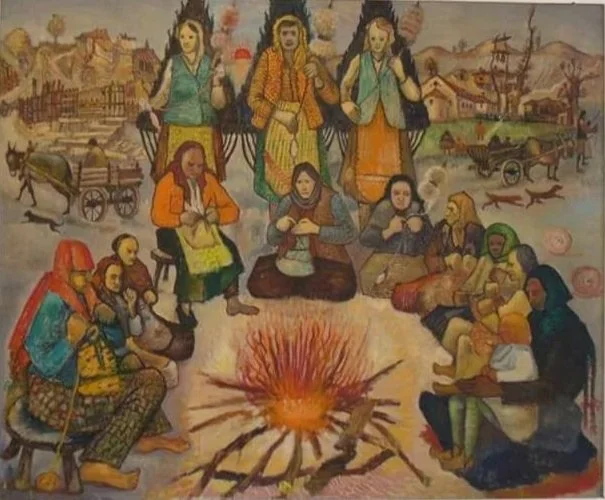
Folklore & Mythology - Practice and research had led to the utilisation of the mythological image of нищенарки (nishtenarki), three female figures described in Rozmari De Meo's Стопанката на Господ (The Keeper of God's House), who spin and shape the threads of human lives. Their association with fate, female lineage and ancestral continuity introduced new ways of considering generational inheritance.
Material & Temporal Investigation - Experimenting with transparent cling film, repeated layering and changing light conditions.
Final Moving-Image Development - fifteen-minute experimental film structured through repetition and duration rather than conventional narrative. The work invites sustained attention to accumulation, partial visibility and the persistence of inherited traces.
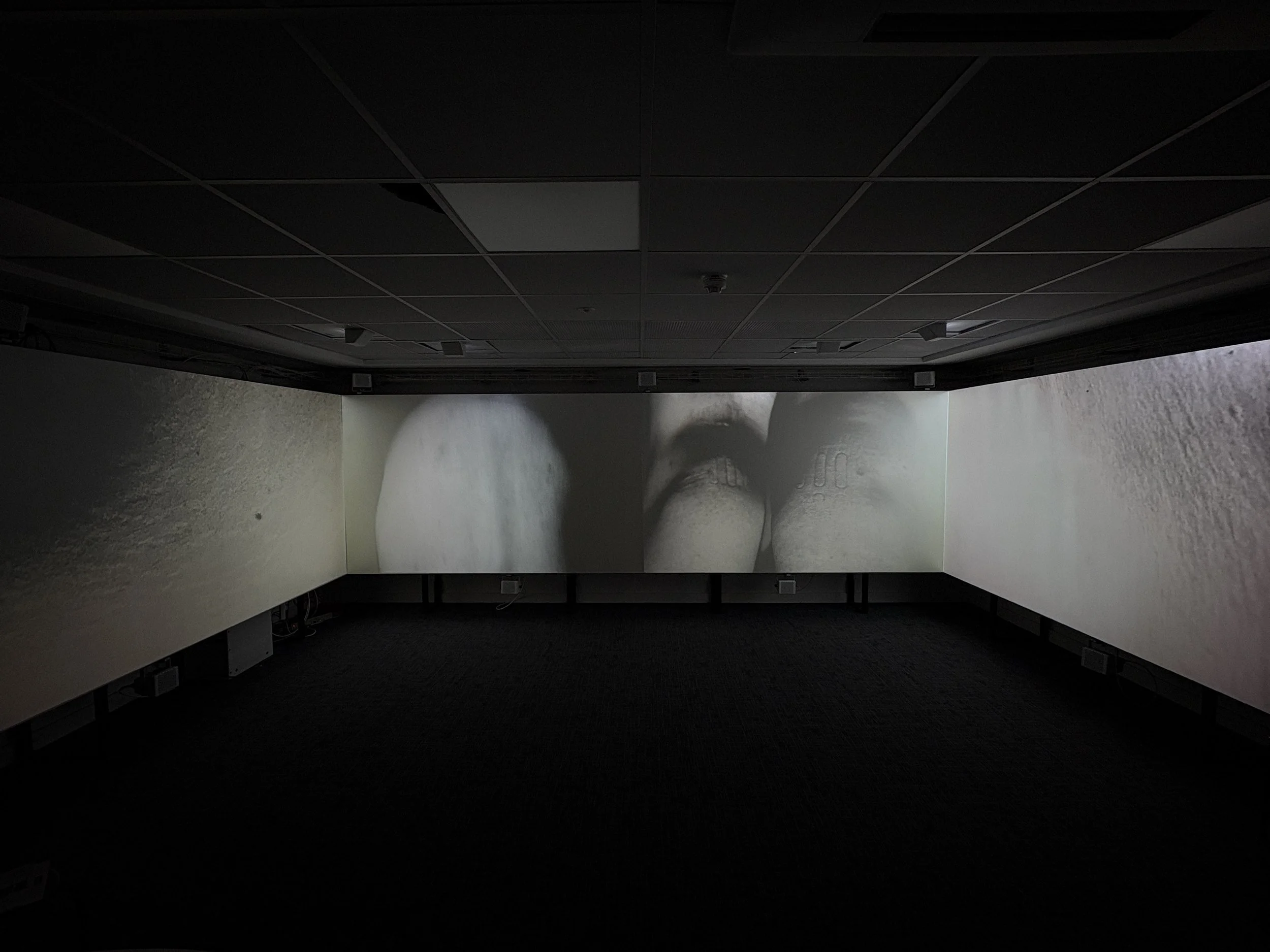
unfold (2026)
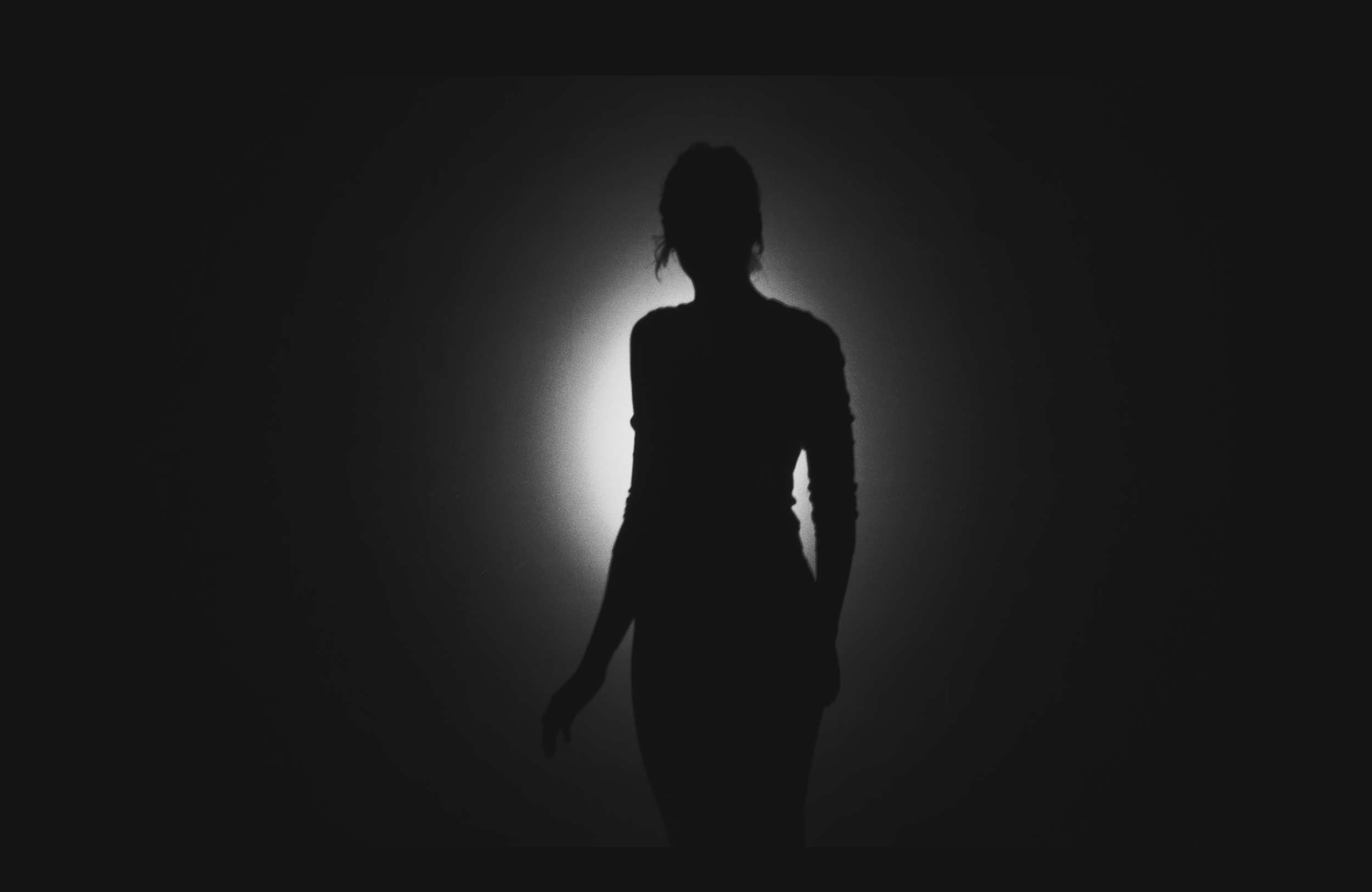
unfold is a practice-led phography installation investigating generational trauma and embodied identity. Working through fragmented photography, projection, and spatial encounter, the project explores how emotional inheritance persists through bodily trace, absence, and repetition.
Conceptual Research - Exploring how generational trauma and lived experiences leave physical and emotional traces upon the body. The project considers the body as both archive and surface, carrying histories through posture, pressure, breath and bodily marks.
Photographic Experimentation - Initially documenting recognisable markers of identity, including tattoos, jewellery, scars and gestures. The research gradually shifted towards fragmented close-ups, questioning what remains of the self when familiar identifying features disappear.
Visual & Theoretical Development - Drawing on ideas of fragmented identity, embodied writing and the relationship between visibility and concealment. Black-and-white photography, abstraction and texture became methods for communicating emotional experience without direct representation.
Iterative Image-Making - Developing photographic archives and digital collages to test visual relationships, sequencing and atmosphere. Through repeated editing and reduction, the work moved away from illustrative imagery towards ambiguity, intimacy and bodily trace.
Spatial & Sensory Experimentation - Investigating how photography, moving image, projection, sound and live presence could transform a gallery into an immersive encounter. Particular attention was given to scale, duration, repetition and the audience's relationship with the projected work in complete silence.
Final Installation & Audience Experience - Presenting three photographic projections and a looping video of breathing across four canvas walls. An accompanying folded programme extended the concept of gradual revelation, inviting audiences to physically unfold and discover the project's visual archive.
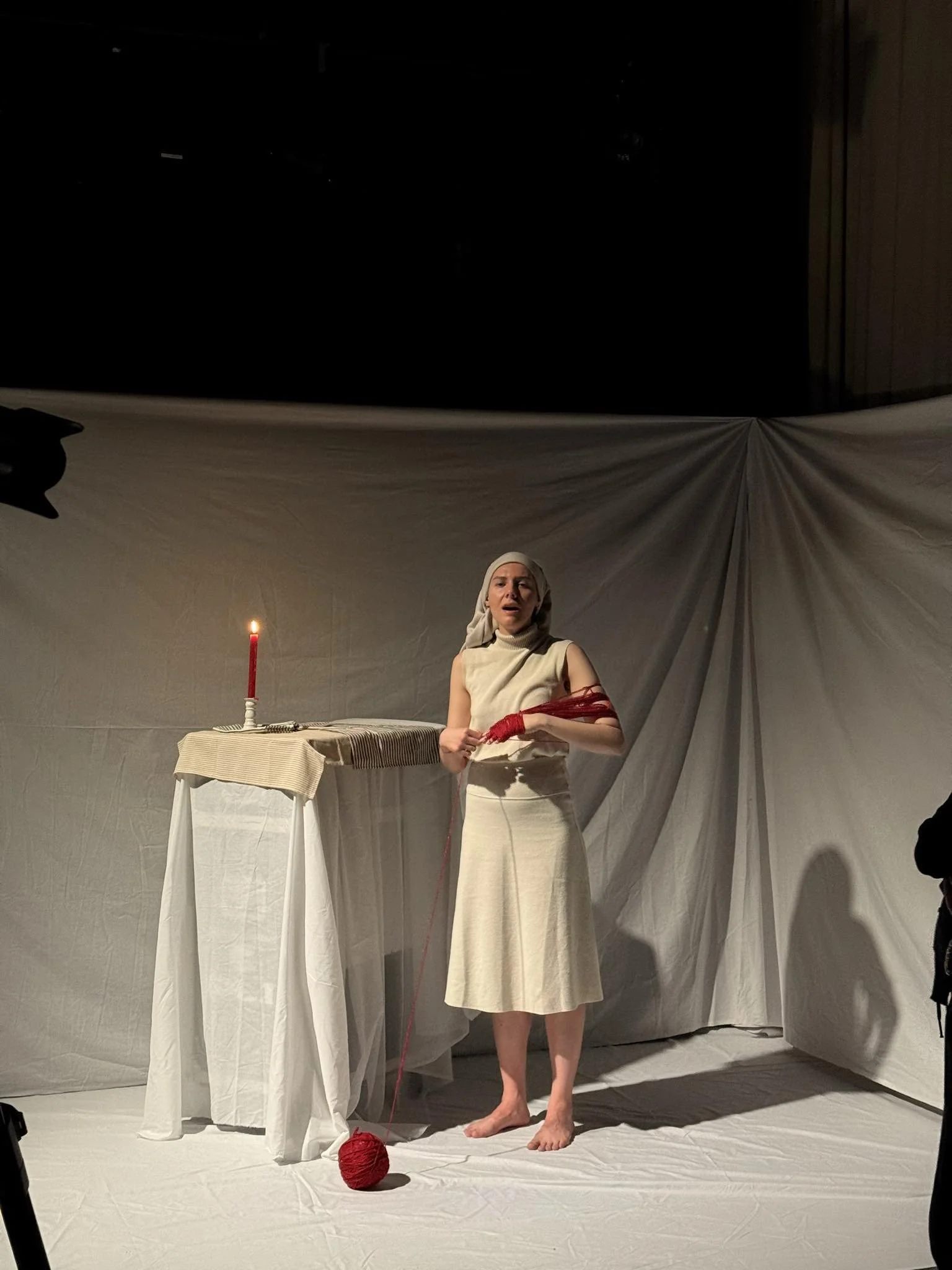
threads of absence (2025)
durational live art performance
threads of absence is an experimental live art performance exploring grief, remembrance and the relationship between personal loss and collective memory. Rooted in the artist's experience of losing her grandmother, the work developed through autobiographical writing, journaling, poetry and autoethnographic research. Bulgarian mourning traditions, ancestral rituals and folklore informed the creative process, alongside research into traditional Bulgarian clothing and shevitsa embroidery. These cultural references shaped the use of red and white textiles, yarn and symbolic gestures, exploring how love, absence and memory are carried through the body.
Through practice-based experimentation, the work developed a physical and vocal language of mourning. Repetitive wrapping and crocheting, slow movement, sustained eye contact and original vocalisations inspired by Bulgarian folklore and liturgical melodies became central performance elements. Rehearsals, performance scores, recordings and reflective documentation informed an iterative process of refinement, culminating in a durational performance that invites audiences to encounter grief as an embodied, ritualistic and shared experience that did not need to be resolved.